The Mariner Sleeps and Rain Replenishes Him
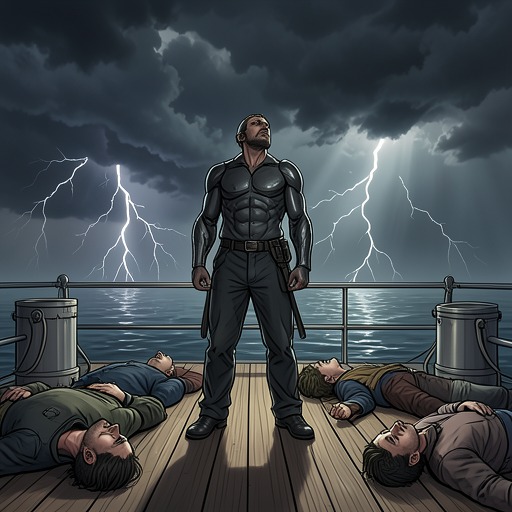
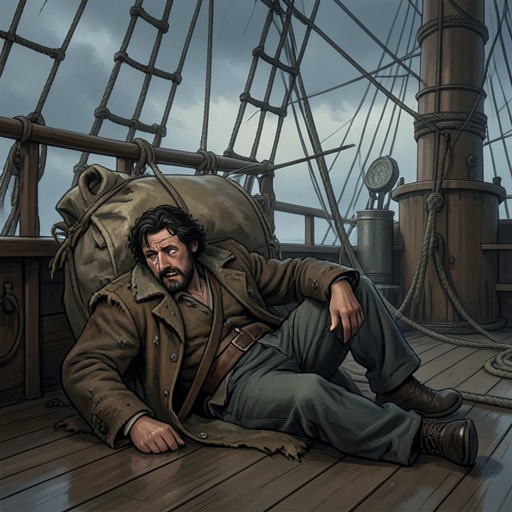
The Rime of the Ancient MarinerThe Mariner Sleeps and Rain Replenishes Him is the turning point in Part the Fifth at which the Ancient Mariner receives physical relief after the ship’s ordeal of thirst. Sleep arrives as a gift attributed to Mary Queen; a dream of dew-filled buckets gives way to actual rain, which wets his lips, cools his throat, and drenches his clothes. The episode does not erase the surrounding supernatural ordeal, but it restores the body at the moment the poem begins to move from paralysis toward renewed motion.
The Need for Relief
The episode follows the Ancient Mariner’s isolation on the sea and his inability to pray. The surrounding narrative has placed him amid the dead crew, beneath a hot, copper-colored sky, with the bloody Sun above the mast; he has looked to Heaven, but a wicked whisper prevents a prayer from forming. Against that oppressive condition, sleep is not an ordinary pause. It is a gentle release that reaches him when conscious effort and prayer have failed.
The relief matters because the Ancient Mariner has been enduring a state in which water surrounds him but cannot satisfy his thirst. His solitude is emphasized by the refrain “Alone, alone, all, all alone,” while the dead men remain on the deck. The poem thus sets the sleep episode against bodily deprivation and spiritual estrangement: before the rain can replenish him, he must first receive a rest he did not produce for himself.
Sleep, Intercession, and Dream
The Ancient Mariner calls sleep a gentle thing, “Beloved from pole to pole!” and gives praise to Mary Queen. The poem directly connects her intercession with what follows: she sends a gentle sleep from Heaven, and that sleep slides into his soul. The phrasing makes rest more than a bodily necessity. It is represented as a gracious arrival, in contrast to the curse and the hostile whisper that have governed his waking experience.
During sleep, the ordinary shipboard buckets acquire a new significance. They had remained on the deck for a long time, useless to a thirsty crew surrounded by undrinkable seawater. The Ancient Mariner dreams that they have been filled with dew. The dream briefly supplies, in imagined form, the fresh water the body needs; it also focuses the scene on a concrete object already present on the ship, rather than on an abstract promise of rescue.
Waking to Rain
The movement from dream to waking is immediate: the Ancient Mariner awakens, and it rains. The dream’s dew-filled buckets do not remain only an imagined consolation. Instead, rain reaches the sleeper directly. His lips are wet, his throat is cold, and his garments are damp. These details register the reprieve through touch and bodily sensation, shifting the scene from the dry heat of the preceding ordeal to actual moisture and coolness.
The account preserves a small uncertainty about the experience: the Ancient Mariner says that he must have drunk in his dreams. The poem does not explain precisely how the rain came to fall or reduce the moment to a natural mechanism. It presents the result concretely—the rain has wetted and cooled him—while letting the relation between dream, sleep, and bodily restoration retain its wonder.
Consequences and Narrative Significance
The rain is a personal replenishment rather than an immediate end to the ordeal. The Ancient Mariner remains aboard the same ship, amid the consequences of the curse; the episode changes his bodily condition without pretending that his isolation has already been resolved. Its force lies in that measured reversal: after thirst, sleep and rain offer relief, and a scene dominated by failed prayer receives an act of mercy associated with Mary Queen.
The reprieve also precedes the ship’s uncanny return to movement. Later, the helmsman steers and the ship moves on although no breeze blows, while the mariners work the ropes. The sequence distinguishes the Ancient Mariner’s restoration from the ship’s supernatural propulsion: rain replenishes his body, but it does not itself explain the motion that follows. In this way the episode acts as a hinge in Part the Fifth, joining intimate, physical relief to the larger return of activity aboard the vessel.